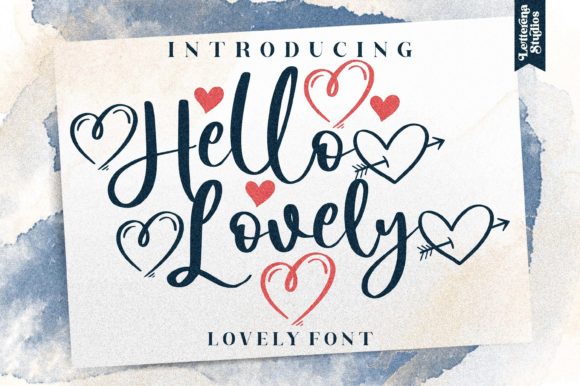
Hello Lovely: A Handwritten Font for Elegant Web Design
As a web designer, I'm always on the lookout for fonts that can add a touch of elegance and personality to my projects. Recently, I had the opportunity to test Hello Lovely, a premium font from the Script Amp category, in a real website layout. This handwritten font is not just visually appealing; it's also highly functional and versatile, making it a great choice for a variety of digital design needs.
Visual Characteristics and Personality
Hello Lovely is an elegant and flowing handwritten font that exudes a sense of grace and sophistication. Its calligraphic influences are evident in the smooth, connected strokes and the graceful swashes that add a decorative touch. The PUA encoding means you can easily access all the glyphs and swashes, allowing for a high level of customization and creativity.
The font's personality is both modern and classic, making it suitable for a wide range of design styles. Whether you're working on a creative portfolio, a boutique online store, or a coaching website, Hello Lovely can bring a unique and memorable touch to your project.
Testing Hello Lovely in Real Web Layouts
I decided to test Hello Lovely in a few key areas of a website: the hero section, a landing page headline, and an image overlay. The results were impressive, and here’s why:
- Hero Section: In the hero section, Hello Lovely worked beautifully as the main heading. The flowing, elegant script immediately caught the eye and set the tone for the entire site. The readability was excellent, even at larger sizes, and the font's decorative elements added a touch of luxury without overwhelming the design.
- Landing Page Headline: For a landing page, I used Hello Lovely for the primary headline. The font's elegance and legibility made it perfect for drawing attention to the main message. The swashes and decorative elements added a touch of flair, making the headline stand out and engage the user.
- Image Overlay: When used over an image, Hello Lovely maintained its clarity and impact. The font's thickness and style ensured that it remained readable, even when placed over a busy background. This makes it a great choice for banners, promotional graphics, and other visual content.
Readability and Responsive Design
One of the most important aspects of any font in web design is its readability, especially across different devices and screen sizes. Hello Lovely performed well in this regard. On mobile screens, the font retained its elegance and legibility, making it a reliable choice for responsive designs.
However, it's worth noting that while Hello Lovely is excellent for headings and short phrases, it may not be the best choice for long body text or small navigation labels. For these, I recommend pairing it with a clean sans serif font, such as Arial or Roboto, to ensure optimal readability and a balanced design.
Font Pairing and Brand Consistency
When it comes to font pairing, Hello Lovely works well with a variety of typefaces. Here are a few combinations that I found particularly effective:
- With a Sans Serif Font: Pairing Hello Lovely with a simple sans serif like Lato or Open Sans creates a modern and clean look. The contrast between the two styles adds visual interest and helps to maintain a professional yet approachable brand identity.
- With a Serif Font: For a more editorial and sophisticated feel, you can pair Hello Lovely with a serif font like Merriweather or Georgia. This combination is ideal for blog headers, article titles, and other content-driven sections of a website.
- With Another Script Font: If you want to create a more ornate and decorative look, you can use Hello Lovely alongside another script font, but be cautious not to overdo it. Use one for the main headings and the other for subheadings or decorative accents to keep the design balanced.
Ensuring brand consistency is crucial, and Hello Lovely can play a significant role in establishing a cohesive and recognizable brand identity. Its elegant and flowing style can be used consistently across different pages and sections of a website, from the homepage to the about page, and even in email newsletters and social media graphics.
Practical Considerations and Licensing
Before using Hello Lovely in your web projects, there are a few practical considerations to keep in mind:
- Webfont Availability: Ensure that the font is available in webfont formats (e.g., WOFF, WOFF2) to ensure fast loading times and compatibility across different browsers and devices.
- File Formats and Alternates: Check the included file formats and alternates to make the most of the font's versatility. The PUA encoding allows for easy access to all the glyphs and swashes, so take advantage of these features to add unique touches to your design.
- Multilingual Support: If your website or project requires support for multiple languages, verify that Hello Lovely includes the necessary characters and glyphs.
- Commercial Licensing: Always check the licensing terms before using the font in commercial projects. Ensure that you have the appropriate license to use the font on websites, client projects, and other digital assets.
In conclusion, Hello Lovely is a versatile and elegant handwritten font that can elevate the visual appeal and professionalism of your web designs. Its flowing, calligraphic style and PUA-encoded glyphs make it a valuable asset for creating memorable and engaging digital experiences. Whether you're designing a creative portfolio, a boutique online store, or a coaching website, Hello Lovely is a font that can help you achieve a beautiful and consistent brand identity.